 |
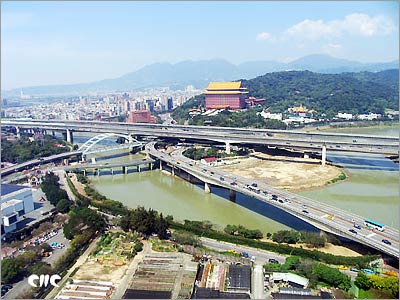
Located to the southeast of the Chinese mainland opposite Fujian
Province, the island province of Taiwan is flanked by the Pacific
Ocean to the east and the Taiwan Straits to the west. Covering an
area of 36,000 sq km, Taiwan includes Taiwan Island, the Penghu
Islands and 80 other smaller neighboring islands and islets. Taiwan
was called Yizhou or Liuqiu in ancient times. Records of Chinese
people developing Taiwan in earlier periods are found in many
historical books and documents. Beginning from the mid-12th
century, the governments of different Chinese dynasties set up
administrative bodies to exercise jurisdiction over Taiwan. The
social development of Taiwan continued according to Chinese
cultural traditions even during its 50-year occupation by Japan
after the war of 1894. In 1945, after victory in the War of
Resistance Against Japan, the Chinese government restored its
administrative organs in Taiwan Province. On the eve of the
founding of the PRC in 1949, the Kuomintang authorities retreated
from the mainland to Taiwan. In 1950, the Korean War broke out, and
the Untied States dispatched its Seventh Fleet to invade Taiwan and
the Taiwan Straits. In 1954, the government of the United States
and the Taiwan authorities signed a "Mutual Defense Treaty,"
bringing about the separation of Taiwan from the mainland.
The CPC and the government of the PRC have made unremitting
efforts to solve the Taiwan issue and realize the reunification of
the country. In February 1972, when President Richard M. Nixon of
the United States visited China, the two sides issued the Shanghai
Communique. On January 1, 1979, the United States established
official diplomatic relations with China, formally recognizing the
government of the PRC as the sole legitimate government of China
and Taiwan as a part of China and, at the same time announcing the
"cessation of diplomatic relations" with the Taiwan authorities,
the annulment of the "Mutual Defense Treaty" and the withdrawal of
all its military personnel from Taiwan. Under these historical
conditions, the CPC and the Chinese government, out of
consideration for the interests and future of the whole nation, put
forward the basic policy of "peaceful reunification, and one
country, two systems" in accordance with the principle of
respecting history and reality, seeking truth from facts and taking
into account the interests of all sides. The main points of the
basic and related policies are:
China will do its best to achieve peaceful reunification, but
will not commit itself to ruling out the use of force; will
actively promote people-to-people contacts and economic and
cultural exchanges between the two sides of the Taiwan Straits, and
start direct trade, postal, air and shipping services as soon as
possible; achieve reunification through peaceful negotiations and,
on the premise of the one-China principle, any matter can be
negotiated. After reunification, the policy of "one country, two
systems" will be practiced, with the main body of China (the
mainland) continuing with its socialist system, and Taiwan
maintaining its capitalist system for a long period to come. After
reunification, Taiwan will enjoy a high degree of autonomy, and the
Central Government will not send troops or administrative personnel
to be stationed in Taiwan. The resolution of the Taiwan issue is an
internal affair of China, which should be achieved by the Chinese
people themselves, and there is no call for interference by foreign
countries. The aforementioned principles and policies embody the
basic stand and spirit of adhering to the one-China principle, and
fully respect the Taiwan compatriots' wish to govern and administer
Taiwan by themselves.
In order to oppose and check Taiwan's secession from China by
secessionists in the name of "Taiwan independence", promote
peaceful national reunification, maintain peace and stability in
the Taiwan Straits, preserve China's sovereignty and territorial
integrity, and safeguard the fundamental interests of the Chinese
nation, the Third Session of the Tenth National People's Congress
examined and adopted the Anti-Secession Law formulated on the basis
of the Constitution in March 2005. This Law has institutionalized
the important political policy of the CPC and the Chinese
government in solving the Taiwan issue in a legal form, fully
manifested that the state, with greatest sincerity and in its best
endeavor, strives to realize its constant advocacy of the peaceful
unification, and simultaneously demonstrated the common will and
the firm resolution of the people throughout China in safeguarding
the state sovereignty and territorial integrity and stopping
secessionists of "Taiwan independence" to secede Taiwan from China
in any name and by any means.
Since the publication by the Standing Committee of the National
People's Congress (NPC) on January 1, 1979 of the Appeal to
Compatriots in Taiwan, the Central Government has resolutely
implemented the basic policy of "peaceful reunification, and one
country, two systems," advocated national reunification through
negotiations, proposed that the two sides start direct trade,
postal, air and shipping services ("the three direct links"), and
adopted sincere measures on its own initiative to promote the
development of bilateral relations. Economically, it has opened its
doors widely to welcome businesspeople from Taiwan to make
investments and engage in trade activities on the mainland, and
protected their legal rights and interests. In addition, the
Central Government has actively promoted people-to-people contacts
and bilateral exchanges in the fields of science and technology,
culture, sports, academia and journalism; and authorized the
mainland's Association for Relations Across the Taiwan Straits, a
non-governmental organization, to establish relations with Taiwan's
Straits Exchange Foundation, and engage in talks on economic and
routine affairs. In 1992, the two associations reached a verbal
agreement that both adhere to the one-China principle. The "Wang
(Daohan)-Koo (Chen-fu) talks" held in April 1993, in Singapore,
between the leaders of these two organizations signaled a
historically important step forward in the development of
cross-Straits relations. In October 1998, Koo Chen-fu paid a visit
to Shanghai and Beijing, and reached with Wang Daohan four points
of common understanding on dialogues between the two organizations
on political, economic and other issues.?
At the invitation of the CPC Central Committee and the General
Secretary Hu Jintao, Lian Zhan, Chairman of the Kuomintang of China
leading a delegation visited the mainland from April 26 to May 3,
2005, realizing the first summit meeting of the two parties in the
past 60 years. Both parties advocate to adhere to the "1992
Consensus," oppose to "Taiwan independence," seek peace and
stability in the Straights area, promote the development of
relationship between the two sides, and safeguard interests of the
people on both sides. From May 5 to 13, James Soong, Chairman of
the People-First Party also headed a delegation to visit the
mainland at the invitation of the CPC Central Committee and the
General Secretary Hu Jintao. Both sides reached six common
understandings including promotion of restoration of negotiation as
soon as possible between the two sides on an equal footing on the
basis of "1992 Consensus." From July 6 to 13, Yok Mu-ming, Chairman
of the New Party in Taiwan leading a delegation paid an 8-day visit
to the mainland under the theme of commemorating the 60th
anniversary of China's victory in the resistance war against
Japanese aggression.
On January 30, 1995, Jiang Zemin, General Secretary of the CPC
Central Committee and President of the People's Republic of China
at that time, delivered an important speech titled, "Continue to
Fight for Fulfilment of the Great Cause of Reunification of the
Motherland." In his speech, Jiang further expounded on the
connotations of the policy of "peaceful reunification of the
motherland, and one country, two systems," and put forward eight
propositions, such as, adherence to the principle of one China;
peaceful negotiations between the two parties on both sides of the
Taiwan Straits may be held step by step; China will do its best to
achieve peaceful reunification, but will not promise not to use
force; economic exchange and cooperation between both sides should
be promoted; both sides should jointly inherit and carry forward
the fine traditions of Chinese culture; hopes should be placed on
Taiwan compatriots; all political parties and personages from
different walks of life in Taiwan are welcome to visit the mainland
and exchange opinions on the relations between the two sides and on
peaceful reunification; and leaders of both sides should exchange
visits in their proper capacities.?
On March 4, 2005, Hu Jintao, General Secretary of the CPC
Central Committee and President of the People's Republic of China,
put forward four point guidelines on the cross-Straits relations
under the new situation, namely, never swaying in adhering to the
one-China principle, never giving up efforts to seek peaceful
reunification, never changing the principle of placing hope on the
Taiwan people, never compromising in opposing the "Taiwan
independence" secessionist activities.
The above eight propositions raised by Jiang Zemin and the four
points put forward by Hu Jintao fully embody the consistency and
persistence of the CPC and the Chinese government on resolution of
the Taiwan issue, and embody their determination and sincerity to
develop cross-Straits relations and promote the reunification of
the motherland. These opinions have been warmly welcomed by the
Chinese people at home and abroad, and aroused great attention
among the international community. Following China's resumption of
the exercise of sovereignty over Hong Kong and Macao, the Chinese
people throughout the country eagerly hope that the Taiwan issue
will be solved as soon as possible to realize the complete
reunification of China.