Why and How the CPC Works in China
 0 Comment(s)
 Print
Print E-mail
China.org.cn, June 30, 2011
E-mail
China.org.cn, June 30, 2011
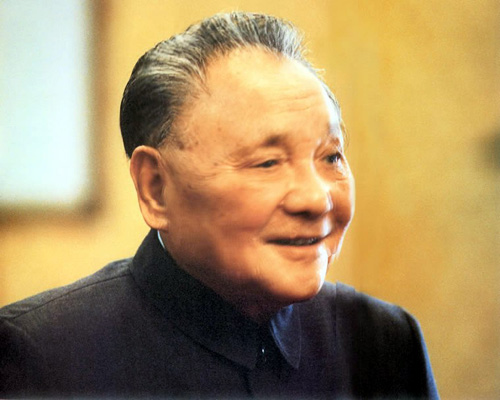
Correct handling of mistakes
When it made serious mistakes during its exploration of the correct road to socialism the CPC made no attempt to cover up the truth, but openly admitted, reflected on and corrected the mistakes, and learned from them.
For the mistakes in the course of the Great Leap Forward, Mao Zedong volunteered to assume personal responsibility. At a central work conference held in early 1962, which was attended by a total of about 7,000 people, including the leading officials of the CPC Central Committee and its various departments, of the central bureaus, provinces, municipalities, prefectures and counties, as well as cadres in charge of a number of important factories and mines, Mao said, "I bear the responsibility for all the direct mistakes made by the Central Committee, and share the responsibility for the indirect ones as well, because I am chairman of the Central Committee. I do not want others to shirk their responsibilities. Some other comrades also have to bear responsibility, but I shall be the first to do so."
After the conference Chairman Liu Shaoqi held a supreme state conference. He informed the non-Communist party democrats of the essential points of the conference, indicating that the CPC should bear the responsibility for shortcomings and mistakes made in domestic work in the previous few years, and the main responsibility should rest with the CPC Central Committee. On behalf of the State Council, Premier Zhou Enlai made a self-criticism for the problems in government work. Inspired by the CPC's solemn, honest and above-board attitude of frank willingness to admit and correct mistakes, the various non-Communist parties and democratic personages without party affiliation expressed their willingness to help each other and unite as one to overcome difficulties together with the CPC.
Mao never forgot the lessons of the Great Leap Forward. Recalling that painful experience, he cautioned that those lessons should be kept in mind and constantly communicated to the people. With the fundamental improvement of the national economy in 1965 some leaders became over-optimistic. But Mao warned them: "Given the past experience, haste makes waste, so we might as well try to achieve our goals little by little and slowly. I think everybody would like to do much, and you also would like to do much. It won't do to collect too many taxes or grain taxes from the people. We will fall out with them. It is a matter of principle. We should do things according to objective possibilities, which should not be exceeded. We should leave some room in accordance with objective possibilities. We will have no way out if we cut ourselves off from the ordinary people."
As for how to treat the mistakes of the Great Leap Forward, Deng Xiaoping gave two speeches in the early phase of the reform and opening-up era. In February 1980 he pointed out, "Do not get the impression that only one person was wrong. I am qualified to say this because I made mistakes... In the Great Leap Forward of 1958 we were over-optimistic. I'm afraid many of the old comrades here were over-optimistic. The problem did not involve just one person." In April 1980, in a conversation with comrades on the Central Committee, Deng said, "In the Great Leap Forward Comrade Mao Zedong became over-optimistic, but what about the rest of us? Comrades Liu Shaoqi, Zhou Enlai and I did not object, and Comrade Chen Yun did not speak out. On these issues, we should be fair. Do not get the impression that the other people were all correct, and only one person made mistakes. This does not accord with the truth. When the Central Committee made a mistake, the collective should be to blame rather than a single person."
The practice of actively admitting mistakes, shouldering responsibilities and learning lessons from the mistakes on the part of the leaders of the CPC Central Committee did not damage their images, but gained them the understanding and support of the masses.
When the Cultural Revolution ended, the CPC Central Committee started to restore things to order. The "Resolution on Certain Questions in the History of the CPC Since the Founding of the People's Republic of China" totally negated the Cultural Revolution as an overall serious mistake and at the same time clearly pointed out that Mao Zedong should be mainly responsible for those mistakes.
Failure is the mother of success. The Chinese are always good at regarding a mistake as the teacher of correct action.
While completely negating the Cultural Revolution, Deng Xiaoping said that the Cultural Revolution also had a "merit," for "it provided a lesson from negative experience. Without the lessons drawn from the Cultural Revolution, the ideological, political, and organizational lines and series of policies since the Third Plenary Session of the Eleventh Central Committee of the CPC could not have been formulated… The Cultural Revolution has become our wealth."
While acknowledging that Mao Zedong had made some mistakes, the CPC Central Committee also correctly evaluated his achievements, setting to rights the two kinds of incorrect trends of thought which either completely affirmed or negated Mao. Huang Kecheng, who had been wronged for up to 20 years, pointed out after his return to work: "Some comrades have used many extreme words to comment on Chairman Mao, and some have even made him out to be without a saving grace at all. I don't think this is correct. This practice is absolutely contrary to the facts, and very unfavorable to our party and people as well. It is understandable that some comrades, especially those who have been attacked or persecuted, have harbored resentment. You all know that in Chairman Mao's later years I also suffered some hardships. But I think one should not be swayed by one's personal feelings and emotions on such a vital issue. We can only consider the issue from the viewpoint of the fundamental interests of the whole party and country, the fundamental interests of one billion people, and the very practices that are good for our future generations and conducive to the cause of socialist revolution. Over the past years, Chairman Mao has been widely recognized as the leader of our party and country and a symbol of the Chinese revolution. This is in line with reality."
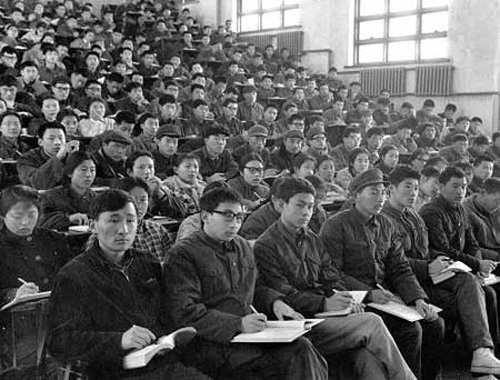
This speech had a major impact on the correct understanding of Mao Zedong and Mao Zedong Thought. On August 21 and 23, 1980, Deng Xiaoping twice met the Italian journalist Oriana Fallaci, and answered her questions. When talking about his evaluation of Mao, Deng pointed out that Chairman Mao's achievements should rank first, and his mistakes second; he was the main founder of the CPC and the People's Republic of China. "What he did for the Chinese people cannot be denied," Deng said. "In terms of our feelings, we will always commemorate him as the founder of our party and country;" "Many times he saved the Party and country from crises. Without him, at the least we would have had to fumble our way in the dark much longer." In the process of drafting the "Resolution on Certain Questions in the History of the CPC Since the Founding of the People's Republic of China," Deng pointed out, "In many fields, we still need to do the things that have been put forward but not done by Comrade Mao Zedong, to rectify the things that have been wrongly opposed by him, and to do well the things that have not been done well by him. We will do this for a long period of time in the future. Of course, we also have our development. We will continue to develop."
Look squarely at the mistakes and rectify them. Then there would be a right direction for the continuing development of the country.
On March 24, 1989 Hu Qiaomu, former secretary to Mao Zedong and former member of the Political Bureau of the CPC Central Committee, at the invitation of American physicist Prof. Li Zhengdao, visited the United States. At the California Institute of Technology Hu gave a speech titled, "Why Did China Make a Two-Decade 'Left' Mistake?" The title of the speech resulted from his careful consideration. On the one hand, it showed that China had not only walked out of the "Left" shadow in practice and ruled out interference from more "Left" mistakes; on the other hand, it demonstrated that the CPC had enough theoretical courage to recognize its mistakes and shortcomings, and enough theoretical wisdom to explore a new road of development.
Pursuing truth constantly and correcting mistakes as they occur enable the Party to win public support and be invincible. Mao Zedong pointed out in an article: "If we have shortcomings we are not afraid to have them pointed out and criticized, because we serve the people… If, in the interests of the people, we persist in doing what is right and correct what is wrong, our ranks will surely thrive." In 1962 he said, "If we have made mistakes... I think we should not be afraid of them. Our attitude is: Uphold the truth, and correct mistakes as they occur." In 1965 Deng Xiaoping also pointed out, "If there is no spirit of criticism and self-criticism, we will not sum up experiences and correct mistakes in time; we will not use the correct and incorrect, positive and negative experiences to educate the cadres, Party members and the masses. Comrade Mao Zedong has always taught us that there are no parties, people or masses that make no mistakes, and the point is that we should sum up experiences and review our work with the spirit of criticism and self-criticism."
What Mao Zedong and Deng Xiaoping said are typical of the cognitive tradition and way of thinking of the Chinese people in handling mistakes. They have always thought that gold cannot be completely pure and man cannot be absolutely perfect; as all men are not sages, they cannot be free from errors. Even pure gold has defects; even sages make mistakes. In the last chapter of the Analects of Confucius, there is a saying: "Mistakes of a gentleman are like eclipses of the sun and the moon; if one makes a mistake, everyone will see it, but if he corrects it, all will respect him." The practice that the CPC makes no attempt to cover up its mistakes, but corrects them promptly is in line with the Chinese criterion of judging the "mistake of a gentleman." Therefore, it is not difficult to understand why the CPC still enjoys the support of the masses.
"Upholding the truth and correcting mistakes as they occur" will continue to be the working attitude, method, and creed that the CPC needs to adhere to in order to keep the trust of the people in the future process of reform and development.


