By Zheng Fengtian and Han Zhenhua
The Ministry of Commerce is probing US dumping of cars and chicken onto the Chinese market in response to the 35 percent tariffs imposed on Chinese tires. But this mild response will not dampen the growing mood of protectionism in the Democratic Party. A better alternative would be to hit US farmers with curbs on soybean imports. This would enrage US farmers and put pressure on the Obama administration, while providing welcome relief for domestic soybean producers, who have been badly hit by massive imports of genetically modified beans from America.
China sees the US tire tariffs as a violation of the World Trade Organization (WTO) rules and is threatening to file a formal complaint. The China Rubber Industry Association has condemned the decision as "unjust and unfair" and called on the Chinese government to retaliate. Alejandro Jara, deputy director-general of the WTO, said the US government's decision is "a cause of concern".
But simple denunciations will not change anything. Protectionism is an old trick rolled out regularly by the Democratic Party. Obama couldn't afford to antagonize China in the midst of the financial crisis, but now the recession is easing, old stereotypes are resurfacing. The sanctions on tires follow a pattern pursued by Obama's Democratic predecessors. This time the excuse is the need to protect 5,000 jobs in the US tire industry. But has Mr. Obama thought about how his move will affect the job market in China? Does he care how many Chinese will lose their jobs because of his protectionist decision?
|
|
|
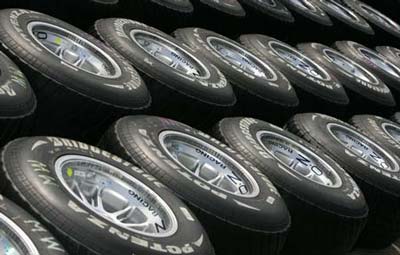
The Ministry of Commerce is probing US dumping of cars and chicken onto the Chinese market in response to the 35 percent tariffs imposed on Chinese tires. |
China can't afford to give US protectionists a smooth ride. We need to teach our partners the importance of mutual respect. The best way to do this would be to impose punitive sanctions on soybean imports.
Domestic soybean producers hit by transgenic imports from U.S.:
Margins on domestic soybean production were not bad in the years from 1996 to 2000 when soybean oil could be sold for 4,000 yuan (US$585.8) to 5,000 yuan a ton. Domestic production reached about 17 million tons per year. But things changed in 1999 when overseas investors began to take stakes in the market. Oil production capacity jumped by 5 million tons in 2001, 2.8 million tons in 2002, and 13.5 million tons in 2004. The National Development and Reform Commission calculates that the processing capacity of soybean oil has reached 70 million tons, far greater than existing demand.
The market first dived in 2004 following a group purchase of American soybean futures by Chinese processors. The purchase was the result of fraudulent information circulated on the Chicago futures market. It was signed at the extremely high price of about 4,300 yuan per ton, which plummeted to about 3,100 yuan just one month later. The blunder cost the domestic oil industry more than 4 billion yuan. Many factories closed down. This gave overseas investors the chance to buy into the industry. By the end of 2005 foreign interests controlled 70 percent of the domestic soybean oil market. In April 2006, 64 out of 97 producers of edible oil were either wholly-owned foreign companies or joint ventures. Between them, they controlled 85 percent of the soybean market in China.
The takeover of the Chinese soybean market may have been planned even before the wrongheaded purchase in 2004. As early as in 1999, overseas investors started to import their transgenic soybeans to be processed in plants they had set up along the southeastern coast of China. That was the first step in their move to monopolize the market.
The takeover of domestic factories on the brink of bankruptcy following the 2004 soybean futures fiasco was the second stage in the multinationals' grab for the Chinese soybean market.
Multinationals have gradually forced the Chinese soybean industry into a supply chain that starts with cheap agricultural supplies from the Americas, where conglomerates control soybean prices by manipulating prices of soybean futures on the Chicago Board of Trade (CBOT), and ends at 64 manufacturing bases in China.
US soybean subsidies mean unequal competition:
The 2002 US Farm Bill raised already high soybean subsidies and delivered a major boost to exports. The subsidies led to year-on-year reductions in the price of US soybeans. The major overseas market for US soybeans is China.
As China increased its imports of soybeans, the income of domestic producers fell. In 1998, the net return per mu (equal to 1/15 of a hectare or 1/6 of an acre) was 64 yuan (1 yuan equals to around US$0.15); by 1999, it had fallen to 56 yuan; and by 2001 it had dropped as low as 33 yuan.
According to a survey carried out by the Development Research Center of the State Council, each time the price of US soybean drops by one percentage point, the aggregate annual income of Chinese soybean farmers falls by 270 million yuan.
US subsidies violate international trade rules:
In 1998, unit production costs of US soybeans were already higher than unit income. From 1998 to 2001, the unit income from US soybeans continued to fall, and the gap between costs and income grew. Only government subsidies allowed soybean farmers to stay in business. From September 1999 to August 2001, the market price was, on average, 30 percent lower than production costs. From 1998 to 2002, earnings from each hectare of soybeans were, on average, US$675 lower than production costs.
But encouraged by increased subsidies, US soybean farmers increased their planting area from 23.39 million hectares in 1990 to 30.44 million hectares in 2004, an average annual growth of 2 percent. Output grew from 52.42 million tons to 85.49 million tons, an average rise of 3.6 percent per year.
|
|
|
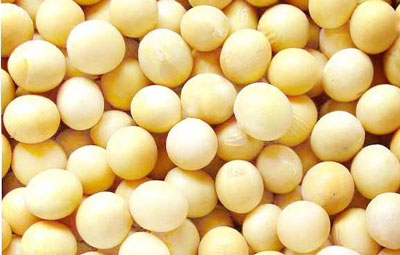
China can't afford to give US protectionists a smooth ride. We need to teach our partners the importance of mutual respect. The best way to do this would be to impose punitive sanctions on soybean imports. |
Increased supply saw prices of US soybeans fall 40 percent from US$7.35 per bushel in 1996 to US$4.38 in 2001. Paradoxically, the area planted with soybeans grew from 28.33 million hectares in 1997 to 30.06 million hectares in 2000.
The soybean subsidies in 2002 US Farm Bill were of two kinds: The first is direct subsidies to producers, including marketing loans, loan deficiency payments and seasonal subsidies; the other is in the form of government services, including research, technology, pest control, checking and testing, infrastructure construction and environmental protection.
Research by scholars such as Cheng Guoqiang of the Development Research Center of the State Council shows US soybean subsidies were over US$5 billion in 2004. For every US$100 worth of soybeans, US$24 is financed by US government subsidies and only US$76 by the market. This is a clear violation of WTO rules.
The US subsidies artificially drive down soybean prices in China and worldwide:
Since China opened its soybean market in 1996, imports have grown from 1.11 million tons to 20.23 million tons in 2004, and are now 20 percent higher than total domestic production. US soybeans account for 40 percent of imports. As American soybean subsidies depress the international market price, domestic prices have in turn declined. This directly affects the income of Chinese farmers. By 2006, the price of domestic soybeans had dropped to less than 2 yuan per kilogram.
This blog was first published in Chinese on September 14, and translated by Wu Jin and Zhou Jing.
(China.org.cn September 18, 2009)