Traditional medical practices are enjoying a worldwide revival.
Mongolian medicine, once criticized as unscientific, is now
acknowledged to be highly effective. China and many Western
countries are currently engaged in studying and promoting this
ancient medical art.
Mongolian medical treatment traditionally uses a small amount of
medicine to treat diseases. Costing less money, it is convenient
and easy. Significantly, treatments are not traumatic. Today
Mongolian medicine is frequently utilized for treating and
preventing chronic and difficult diseases: stomach trouble, liver
and gall disorder, coronary heart disease, gynecological disease,
and problems related to blood, skin and bone.
Until this century the history of traditional Mongolian medicine
and its achievements were known only among Asians. An important
foundation of Mongolian medicine rests with Indian ayurvedic
philosophy. When the Mongol Huns traveled through India and Central
Asia during the 5th century BC they made contact with the Indian
subcontinent. Their travels, together with the spread of Buddhism
into Mongolia, confirmed evidence of ancient Mongolian ties with
Indian medicine. Much was lost or forgotten until recently but in
the 1990s Mongolian doctors from both China and Outer Mongolia
began disseminating their knowledge in an attempt to preserve this
precious knowledge. Today scholars are translating old sutras
written in the Mongolian, Tibetan and Sanskrit languages into
English, German and Chinese.
Mongolian medical texts are rooted in history; some are more
than 800 years old. Records indicate that sometime around the 11th
century, Mongolians created many medical therapies based upon their
environment, culture and lifestyle. By the early 13th century,
ancient Mongolian medicine coalesced into a sound medical theory
based on unique clinical experiences. From the 14th century onwards
during the second spread of Buddhism in Mongolia, Mongolians again
borrowed and learned from Indian ayurvedic medicine; they
translated many Indian books at this time. By the 16th century,
ancient Indian medicine and Tibetan medicine had thoroughly
integrated into Mongolian medicine.
Mongolian doctors or emchis became so adept that they
have been respected in Central Asia and China for centuries. During
the Ming and Qing dynasties these emchis served the Chinese
court. They also absorbed Chinese theories, thus propelling the
profession again into a new stage of development. Many new
principals based on the integration of the ideas of the three
cultures were formulated and put in practice. They are still used
today.
During the Qing Dynasty (1644-1911) not only emchis but
also thirty bone-setting Mongolian doctors called bariachis
waited upon Chinese nobility. These doctors introduced various
treatments: diet therapy, traditional moxibustion therapy,
acupuncture therapy, blood letting therapy, mineral bath therapy,
hot-sand therapy and mud therapy, to the northern Chinese.
Since the People's Republic of China was founded it has heartily
supported traditional Chinese and Mongolian medicine. In the 1950s
Mongolian medicine added western scientific innovations to the vast
body of traditional practices. The Chinese government has steadily
promoted advances in Mongolian medical care, research and
education. In 1958 the Department of Traditional Chinese and
Mongolian Medicine at the Inner Mongolia Medical College opened its
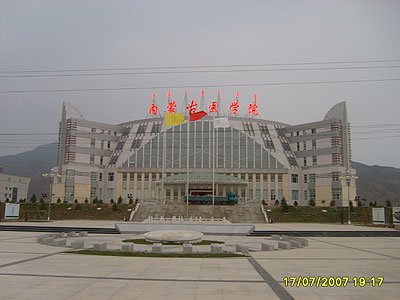
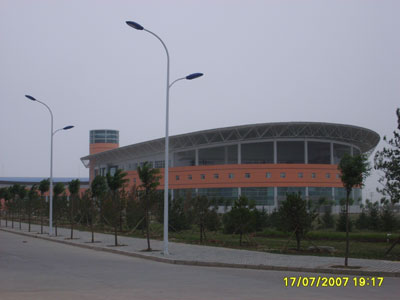
doors to students. This year it expanded, opening a brand new,
state of the art campus just outside of Hohhot City. The Chinese
government has also established scores of Mongolian medicine
hospitals since 1999, including 41 in Inner Mongolia, 3 in Xinjiang, and 1 each in Liaoning, Heilongjiang, Gansu and Qinghai.
Inner Mongolia Medical
College
Mongolian medical theory
Mongolian medicine grew out of life experiences focused around
herding, wrestling, riding, and fighting on the vast grasslands.
Traditionally the medical arts were under the auspices of the
Buddhist lamas. These lama doctors guarded the accumulated
knowledge of traditional medicine. Physicians studied the five
medical arts: bloodletting, moxibustion, hydrotherapy, massage and
acupuncture.
Bloodletting is used to relieve hotness factors caused by blood
or by xila, a condition that provokes bleeding of wounds,
plague, edema, abdominal distension, gout, tuberculosis, etc.
The ancient art of cupping allows movement of vital energy and
the state of blood in the human body is improved and the disease is
cured.
Mongolian moxibustion involves the practice of burning mugwort
over acupuncture points. Tibetan medicine also adopted this
technique. It is used in conjunction with acupuncture and massage
to relieve pain and drive out illness.
Interestingly, Mongolians have always used water as medicine.
They collected water from any source, including the sea, and stored
for many years. Water therapy is used especially for stomach
problems.
Another unique Mongolian treatment involves fermented mare's
milk, or koumiss. The koumiss treatment is a
dietary treatment, reputed to strengthen people after weakness. It
is also used to treat shock or pain in the chest or in heart
area.
According to Mongolian medical theory, the human body and the
nature are a unity of opposites. Nature has "five elements:" earth,
water, fire, air and space, while the human body also consists of
materials transformed from the "five elements." Doctors explore
three sources affecting the corporeal body: heyi or air,
xila or heat and badagan or cold; and examine the
seven primary components?-- food, blood, muscle, fat, bone,
marrow and sperm.
Mongolian medicine examines relationships between
"heyi", "xila", and "badagan" to explain
the physiological and pathological phenomenon in human body.
"Heyi" is believed to be the body's power to move.?It
directs thinking, language, external and internal body movement. If
"heyi" is unbalanced the healthy status of internal organs
will diminish, manifesting as "abnormal mind": sleeplessness and
forgetfulness, even mental diseases. "Xila" conveys
"hotness." Body temperature, the heat of the organs and spirit are
said to be determined by "xila." Too much "xila"
manifests in a bitter taste in mouth, sourness or anxiety in mood,
and illness. "Badagan" is supposed to be a kind of sticky
material in the body, having the nature of coldness.
"Badagan" manifests as cold and flu, with much fluid
secretion.
Thus, Mongolian practitioners examine the interrelationships
between the sources and the seven components to find irregularities
in order to present a diagnosis. Mongolian doctors also base
diagnostics on a patient's experience rather than the Western
evaluation based on chemical or blood analyses, charts and X-ray
films.
Even today some Mongolian medical doctors are also Buddhist
monks, especially in Outer Mongolia. They recite daily prayers,
meditate, perform ceremonies, bestow blessings and serve the
worshippers with healing rituals to repel misfortune and sickness.
Many draw horoscopes and make astrological calculations. These
physicians give patients blessings to promote physical, emotional
and mental harmony. They strive to relieve stress, depression,
emotional upsets and negative states of mind. These healing methods
are also available for children.
Not surprisingly, Mongolian medicinal cures are based on a
combination of exploring the body's balance, a man's spiritual
harmony and the natural environment. Ancient medical literature
cites the use of minerals as medicine, usually in the form of
powdered metals or stones. And plants, carefully gathered and
harvested, remain the mainstay of Mongolian medicine. According to
ancient doctors every plant has use as a medicine. Preserving,
gathering and utilizing indigenous wild herbs are part of a
Mongolian doctor's education.
Another unique branch of Mongolian medicine is carried out by
Bariachis?-- the specialist bone setters. These
people work without medicines or instruments, relying only on their
hands to manipulate bones back to their proper position.
Bariachis are laymen, without medical training, and they
are born into the job, following the family tradition. It appears
that this traditional practice is in decline, and that no
scientific research has been carried out into it. This treatment is
reputed to cure illness linked to bone fracture, joint dislocation,
or soft tissue damage. Bone setting treatment has six parts:
renovation, fixing, massage, herbal bath, care and recovering. It
has the function of releasing the poison and soothing the sinew and
quickening the blood.
Dom is the Mongolian tradition of household cures. It
is very old and based on superstition. For example: a picture of a
donkey hung over a child's bed will help it sleep. Dom includes
counting the frequency of breathing. Similar to yoga breathing
techniques, dom principals to control the breath does help
relieve psychological problems and distress.
?
Today medical workers utilize modern laboratory tests along with
traditional diagnostic processes. Doctors promote both drug and
drugless methods. Medicinal herbs, powders and pills, as well as
externally applied heating ointments are prescribed. The range of
therapies runs the gauntlet from acupuncture with moxibustion,
cranio-therapy (head massage), whole body massages with herbs and
oils, diet control, bloodletting, cupping to indefinable spiritual
methods using Buddhist rituals and meditation. Many Mongolian
healing treatments may appear strange unless one realizes the
intention is not simply to cure but to move the ill person out of
the time, mind, and body space where the disease or ailment is.
Traditional medicines?-- Mongolian, Chinese and
Tibetan?-- have gained worldwide popularity, acting as an
alternative to modern Western medicine which can be invasive,
traumatic and dependant on chemicals. In recent years Inner
Mongolia has renovated and expanded many of its medical
schools?to meet the growing need of skilled traditional
doctors. Educators have made great efforts to rationalize and
scientifically understand traditional medical practices while
simultaneously preserving the knowledge of traditional indigenous
medicine. Today, even with the acceptance of high tech Western
medical treatments, Mongolian medical arts remain popular among
Chinese and Mongolians alike.
(China.org.cn by Valerie Sartor, July 30, 2007)