|
|
|
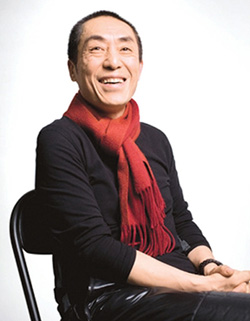
Zhang Yimou [File photo] |
Chinese film makers are divided into six "generations," dating from 1905. Shanghai Daily examines the creative periods and the directors of old Shanghai.
The season is coming, once again, when directors start reaching out to grab a bigger piece of the pie - the New Year's film market.
At this time last year, as many people recall, the film circle atmosphere was a bit tense because of rivalry between directors Zhang Yimou ("Curse of the Golden Flower") and Jia Zhangke ("Still Life"). Critics called it a "war."
First came criticisms about style and content, then they started digging at each other. Finally, it developed into a conflict between the whole fifth and sixth-generation directors, of which Zhang and Jia are representative.
Unlike their Western counterparts, Chinese film makers are identified mostly in groups. The term "generation" originated in the 1980s when it exclusively referred to the first graduates of the Beijing Film Academy after the national college entrance exam was resumed after the "cultural revolution" (1966-76).
They are known as the fifth generation, and Zhang, together with Cheng Kaige and Feng Xiaogang, are the most representative.
Film critics identify six generations, going back to the birth of Chinese movies in 1905, the first generation, until today, the sixth generation.
The relationship between neighboring generations is usually master-apprentice, or sometimes rivals.
Zheng Zhengqiu and Zhang Shichuan are considered the "first generation" as they set up the original outline of Chinese movies.
Cai Chusheng and Sun Yu are the "second generation," known for the realistic depiction of daily life in the 1930s-40s.
Xie Jin and Shui Hua are called the "third generation" after the founding of the People's Republic of China in 1949.
Xie Fei and Wu Yigong are the "fourth" who sought independent status of movies, setting film apart from the style of drama after 1979.
The famous "fifth generation" turned out lavish spectacles of old China.
Finally the "sixth generation" like Jia, Wang Xiaoshuai and Zhang Yuan, turn their attention to urban life in the late 1990s.
"The generation of directors is a unique term for Chinese cinema and it has a close connection with the social and historical background of China's development," says Professor Yang Yuanying in her book, "The Study of Chinese Directors."
"Individual directors are grouped in the same generation both for their similar ages and more important, their shared ways of artistic expression."
 |
|
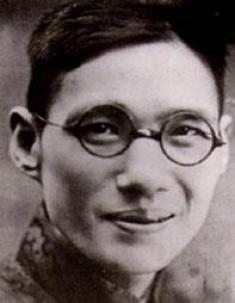
Zheng Zhengqiu [File?photo] |
Shanghai center
The very first Chinese movie was "Dingjun Shan," ("Dingjun Mountain") a recording of a Peking Opera performance of the same name in 1905.
From that time, the era of silent movies lasted about 30 years and Shanghai was its center. Pioneers of national cinema built their own movie studios and cinemas while attracting talents.
The most famous was Mingxing (Stars) Studio founded in 1922. It was China's creative cinema center where Zheng Zhengqiu and Zhang Shichuan worked.
"Zheng and Zhang were quite different both in figures and personalities," commented Xia Yan (1900-95), famous writer and film theorist. "Zheng was thin and short while Zhang was strong and tall. Zheng behaved like a scholar while Zhang was more like a boss."
The pronounced differences between the two did not stand in the way of their collaboration. On the contrary, it was the key to their success. They complemented each other.
Zheng was more socially responsible while Zhang was quite business-driven. Zheng more focused on social injustice while Zhang preferred the genres of martial arts and comedy. Movies scripted by Zheng and directed by Zhang were always hits.
Their major films included "Die for Marriage" (1913), "Orphan Rescues His Grandfather" (1923) and "Twin Sisters" (1933).
"The passing away of Zheng Zhengqiu signals a turning point of Chinese movie history while the rise of Cai Chusheng is a new beginning," said Ke Lin (1909-2000), famous script writer and critic.
Social issues
|

|
|
Cai Chusheng [File photo] |
Cai's "Song of the Fishermen" (1934) won China's first international film award. It was screened for 84 consecutive days. The theme song became an instant national hit. The most popular advertisement of the time said, "Few men live to be 80 years old while fewer films are screened for 80 days."
More sensational ads were written for "A Spring River Flows East" (1947), Cai's box-office hit. One said, "Do bring 12 handkerchiefs with you when coming to watch the film." Another called it "the Chinese version of 'Gone with the Wind'."
Exposing problems and "social darkness" was a major reason for the popularity of these films.
"People lived a hard life at that time, so did actors. They did not enjoy much respect, as today. Actually, most of them didn't have happy endings, especially the actresses," says Zhang Jiyue, a doctoral student of film at Shanghai University.
The most famous example is the death of famed actress Ruan Lingyu. Ruan played the leading role in "New Women" (1934) directed by Cai.
The film was based on a true story of actress Ai Xia who was pretty and smart but committed suicide because of the rumors about her personal life. Unfortunately, life mimicked art. Ruan, just like her character, poisoned herself because of pressure, rumors and her own sad love life.
Sun Yu, another heavyweight in the second generation, also explored the same sad theme.
"Sun was romantic and crowned the "Poet of the Silver Screen," yet he concentrated on social issues and brought his thoughts to his films," says Zhang.
Political elements
The third generation came after the founding of New China. The period from 1949 to 1966 is called the "17-Year Period" in film.
At that time, Chinese cinema changed structurally as the creative center shifted from Shanghai to Beijing, the capital.
|
|
|
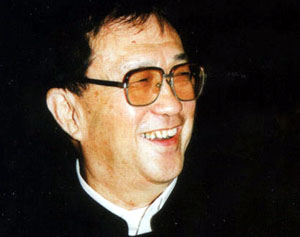
Xie Jin [File?photo] |
Xie Jin stands out as the most productive and influential director over a long period. His films were mostly based on social and historical events and the audience could easily identify with characters and situations.
Xie died very recently, on October 18, just a month before his 85th birthday. His masterpieces include "Woman Basketball Player No. 5" (1957), "Red Female Army" (1961), "Hibiscus Town" (1986) and "The Opium War" (1997).
Nowadays, the term "generations of directors" is not frequently used in the current period of market-driven economy. Varied investment channels and shooting methods give directors larger creative space and individuality.
The idea of a group or generation no longer makes much sense today and critics debate whether the term "generation" is relevant.
(Shanghai Daily December 22, 2008)