| |
Scientific Research
In the first half of the 20th century, only a few towns in Tibet
had Western medical clinics that were opened by foreigners or the
Tibet office of the Government of the Republic of China, while the
vast agricultural and pastoral areas were neglected. There were
only three government-run Tibetan medical institutions---the Lizhong
Tibetan Medical Institute, Moinzekang on the Yaowangshan Mountain
in Lhasa and Gyigyinagar at Tashilhungpo Monastery in Xigaze---that
were poorly equipped. In addition, a small number of private clinics
operated, with about 100 practitioners. In addition to individual
medical practitioners and Tibetan folk doctors in the pastoral areas,
there were only 400 or so medical workers throughout the region,
about four for every 10,000 inhabitants. Moreover, these medical
workers served only the ruling class, leaving the majority of serfs
and slaves with little medical services and supplies. Acute infectious
diseases, such as smallpox and plague, often occurred. During the
150-odd years before 1951, Tibet was hit by smallpox four times,
with an outbreak in 1925 claiming 7,000 lives in Lhasa alone. During
the two occurrences of typhoid fever in 1934 and 1937, more than
5,000 Lhasans died. In some years, the mortality rate exceeded the
birth rate, resulting in slow population growth. Before 1951, average
life expectancy was only 35.5 years.
Since the peaceful liberation in 1951, public health undertakings
in Tibet have witnessed remarkable progress.
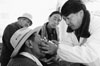 In
recent years, the Tibetan Pharmaceutical Plant has been expanded,
and the Tibet Autonomous Regional Infectious Disease Hospital, the
Tibet Autonomous Regional Healthy Birth Training Center and an inpatient
department of the Lhasa People&'s Hospital have been established.
Currently, Tibetan medical workers have gained a correct understanding
of the pathology, physiology and clinical symptoms of such critical
altitude diseases as altitude pulmonary edema, altitude coma, altitude
hypoglycemia and altitude high blood pressure, and their emergency
rescue means have been raised to the advanced international level. In
recent years, the Tibetan Pharmaceutical Plant has been expanded,
and the Tibet Autonomous Regional Infectious Disease Hospital, the
Tibet Autonomous Regional Healthy Birth Training Center and an inpatient
department of the Lhasa People&'s Hospital have been established.
Currently, Tibetan medical workers have gained a correct understanding
of the pathology, physiology and clinical symptoms of such critical
altitude diseases as altitude pulmonary edema, altitude coma, altitude
hypoglycemia and altitude high blood pressure, and their emergency
rescue means have been raised to the advanced international level.
|
September 8, 1952
|
The Lhasa People's Hospital was officially
founded. By 1954, the Central Government had sent more than
300 medical workers from other parts of the country to Tibet.
Each year, the Ministry of Health also assigned medical college
graduates and transferred working medical staff to work in Tibet. |
|
Early 1959
|
Tibet established a total of 62 medical
institutions, with 480 beds and 791 medical workers and technicians. |
|
End of 1996
|
The number of medical institutions
throughout the region increased to 1,300, with 6,136 hospital
beds. Professional medical workers totaled 10,935, of whom 8,682
were medical technicians. There were also 4,402 rural medical
workers outside the country's official staff quota. |
In 1993, the regional people&'s government promulgated the Interim
Provisions on the Management of Free Medical Care, with an aim of
improving and strengthening the existing public medical service
system. The government decided to appropriate 10 million Yuan as
special free medical service funds in 1993 and 20 million Yuan annually
starting from 1994, with the funds directly allocated to the financial
departments of various counties. The funds have greatly contributed
to the prevention and treatment of diseases for farmers and herders,
easing the shortage of medical service and supplies.
The regional people&'s government has paid high attention to maternity
and child health care and devoted great effort to the construction
of relevant health institutions. Tibet now has 34 maternity and
child care institutions and eight infant-friendly hospitals. With
an aim of decreasing the mortality rate of pregnant and lying-in
women and infants, the region&'s maternity and childcare institutions
at various levels have conducted medical check-ups and treatment
for more than 17,000 women, and introduced systematic management
of vulnerable pregnant women. They have also conducted medical check-ups
and treatment for more than 250,000 children in regard to common
and frequently occurring diseases. A modern system of delivery and
prenatal and postnatal care has taken shape, with 91.75 percent
of babies in urban areas and 57.58 percent in rural areas being
delivered using new methods. Between 1990-95, Tibet cooperated with
the United Nations Children&'s Fund (UNICEF) to launch a maternity
and childcare project in 16 counties. UNICEF provided US$880,000
in assistance funds and the regional government invested 11.87 million
Yuan. The project decreased the mortality rates of pregnant and
lying-in women and infants from 710.8 per 100,000 and 91.8 per thousand
in 1989 to 486.39 per 100,000 and 55.21 per thousand in 1996. Between
1996-2000, the cooperative project was conducted in another 23 counties,
with US$690,000 of assistance funds from UNICEF and 13.63 million
Yuan from the regional government. The cooperative project has greatly
promoted the development of maternity and childcare undertakings
in Tibet.
Planned immunization for children began in an all-round way in 1986
in Tibet. Since then, the occurrence rates of such diseases as measles,
tuberculosis, diphtheria and whooping cough, easily contracted by
children, have drastically decreased.
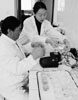 According
to the overall objective of the development of Tibet&'s health undertakings
for 1996-2000 and through 2010, the region will establish a public
health service system consisting of disease prevention, health care
and hygiene supervision, which is adapted to the regional economic
and social development and corresponds to the basic needs of the
people. A development strategy has been formulated to significantly
improve the health conditions in agricultural and pastoral areas,
enable every one to enjoy primary health care, satisfy health service
demands of different groups of people, and improve the health of
various ethnic peoples. According
to the overall objective of the development of Tibet&'s health undertakings
for 1996-2000 and through 2010, the region will establish a public
health service system consisting of disease prevention, health care
and hygiene supervision, which is adapted to the regional economic
and social development and corresponds to the basic needs of the
people. A development strategy has been formulated to significantly
improve the health conditions in agricultural and pastoral areas,
enable every one to enjoy primary health care, satisfy health service
demands of different groups of people, and improve the health of
various ethnic peoples.
Major health indicators are as follows: Average life expectancy
was 67 years in 2000 and will reach 69-70 years in 2010. Infant
mortality rate fell by one-third in 2000 from the level of 1990
and is to decrease a quarter in 2010 from the 2000 level. The death
rate of children under five years of age declined by one-third in
2000 from the 1990 level and is to be down by one-fifth in 2010
from the 2000 level. The mortality rate of pregnant and lying-in
women went down by 50 percent in 2000 from the 1990 level and is
to decline one-third in 2010 from the 2000 level.
|
|


