Debate: Climate change
 0
0 


As the memories of Copenhagen fade, three scholars tell us how to face the challenges of the climate meetings in Bonn and Cancun and what to expect beyond them.
Lin Boqiang: Future rides on going low carbon
|
|
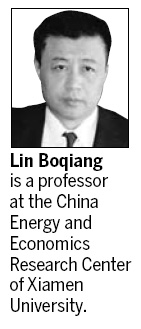
The transformation to a low-carbon economy is already in many of the agendas of countries across the world. This demands enterprises to make every effort to cope with change. All enterprises, including the carbon emission-intensive energy and transport sectors and the low-carbon financial industry, should make low-carbon economy an integral part of their strategic planning. There still are a lot of uncertainties over how to achieve the transformation. But whether an enterprise has a low-carbon economic planning could decide its fate in the next two or three decades.
Climate change and environmental problems have become one of the most important issues for governments and people alike. It's time executives of industries, irrespective of whether they believe in climate science, rose to the challenges created by global warming and sought opportunities favorable to their businesses. This should be their survival strategy.
If enterprises expect to have the competitive edge during this process, they must begin re-examining their orientation and development strategies now. More specifically speaking, they should try their best to optimize the carbon-efficiency of existing products, including infrastructure, the supply chain and finished products, and devise new low-carbon solutions that could meet emission reduction targets. This might break the current industrial layout and establish a new industrial value chain.
Such a transformation can certainly be pushed forward by consumer behavior in the long run. In the short term, a more effective driving force could be the government's policy initiatives. Government policies could make the enterprises understand profoundly the challenges and opportunities brought about by climate change. And they could help them realize the advantages of changing from passive adaptation to taking responsive measures.
China has enjoyed rapid economic growth in the last few decades. Its investments in infrastructure have grown rapidly, too. Since infrastructure facilities are for long term they could provide services for several decades. If there are no major technological breakthroughs within a short period, the economy may experience a so-called "carbon lock-in effect".
That is to say, if we use today's conventional low-efficiency or carbon-intensive technologies to build infrastructure, they may determine the efficiency of the system for the next several decades and the emission capacity can be locked in if we put in greater efforts now. If we want to reshape infrastructure in the future, the space available for maneuvers would be small and the cost very high.
Therefore, once a low-carbon development strategy has been set, the transformation from traditional development to low-carbon economy should be done as soon as possible. During this process, as the main emitter, enterprises' understanding and alternative actions on emission reduction would be critical, while low-carbon technology innovation would be the main driver toward a low-carbon economy.
Low-carbon development will have a great influence on enterprises. Winners and losers will be determined by their actions toward low-carbon development.
Enterprises should first step up efforts to adapt to the challenges of costs because of rising prices in energy, logistics, waste disposal and raw materials. They must then understand and comply with the increasingly stringent environmental laws and regulations and emission reduction policies. As members of society and the major emitters, enterprises must shoulder the corresponding social responsibility and deal with the pressure caused by the environmental concerns of investors, employees and consumers and the economic impact of climate change.
Low-carbon development will create opportunities and new markets, too, and technological advances needed for improving efficiency will enable enterprises to increase profitability while reducing emissions.
Suhit Sen: Progress begins with developed nations
|
|

The Copenhagen climate change conference was nothing if not farcical. The agreement that emerged there was an attempt by rich nations to duck their responsibilities. Unfortunately, there seems to be some disarray in the Southern camp, too.
To begin with, no progress was made in Copenhagen. If anything there was a good amount of regression. The chair and host, Denmark, did its utmost to procedurally undermine the conference by convening meetings between select groups of countries and producing drafts of agreements. There was the meeting between Brazil, South Africa India and China (the BASIC bloc) and the US that produced a draft that was presented before the plenary. The point is Copenhagen was a multilateral meeting of 193 countries.
Then there is the accord itself. Nothing in it comes close to ensuring that temperature rise will be limited to 2 C. In fact, if this accord is the template, rise in global temperatures could be closer to double.
But all this is behind us. What of the future? The Copenhagen Accord cannot possibly be the template for future negotiations because it contravenes several multilaterally accepted principles, including the United Nations Framework Convention on Climate Change and the Kyoto Protocol, on which any climate change agreement must be based.
Bluntly put, developed countries are historically responsible for causing climate change. So they must cut their emissions big time. Only they, not the developing nations, should undertake legally binding emissions cuts. They should provide funds and clean technologies to the developing nations, too, to help them pursue cleaner trajectories of development.
The BASIC bloc must once again lead the global South to defeat the developed world's divide-and-rule policy and ensure that the spirit of the existing agreements hovers over future negotiations.
Many in the West are now calling China, and to some extent India, the deal-breakers. This may be partly true because they agreed to get into a huddle. But, clearly, the US was the main deal-breaker. And the reason for that is simple. The US needs to cut emissions by 40-50 percent over the 1990 levels. It has not offered anything to the international community by way of hard numbers. It has not even ratified the Kyoto Protocol. All it has to show is the ludicrous reduction of 17 percent below 2005 levels that doesn't even look like getting to the finishing line.
For a while let's forget the problem of historical responsibility and a just global deal. The point is that if the US offers these numbers and seeks to pass on the burden of emissions to developing countries, the kind of global cuts we need won't happen and temperature rise will breach the minimal 2 C.
So, what appears to be happening is nothing, zilch. Climate change talks won't go anywhere because somewhere there will be a deadlock - even the more accommodative Europe has not delivered on commitments. Now that it has hardened its line, we are nowhere. And a bad deal for the developing countries won't halt climate change to the degree needed.
There are larger questions than just global negotiations and geopolitics and the North-South divide. Forget principles of fairness. There are civilizational issues involved. No political establishment in the US can get the kind of emission cuts needed, simply because there are powerful lobbies, especially those commanded by the energy and automobile lobbies, which will not let the US Senate pass 40-50 percent cuts over 1995.
There are even deeper problems. Lifestyles will have to undergo drastic change. But as George Bush Sr said at Rio de Janeiro more than a quarter of a century ago: The American way of life is not up for negotiation.
Dennis Pamlin: Innovation the key for China in Bonn
 |
In a few days the world's countries will meet in Bonn for a new round of climate negotiations. This presents an opportunity for China to support a more collaborative process with focus on solutions instead of problems.
Two major challenges face climate negotiations after the Copenhagen conference last year. First, climate negotiations are now so complex that no one has an overview of what's going on. Second, the culture at climate negotiations is one of short-term thinking where everyone wants others to reduce emissions and protect its own fossil industries.
China has an opportunity to put the negotiations on a positive track and demonstrate its willingness to deliver concrete results with the help of two suggestions. These two suggestions could be presented in Bonn in order to support future negotiations that will help the world deliver the reductions we need.
First, it could present ideas on how to make the process more open and transparent. New technologies with mobile applications and web-solutions allow experts and people all over the world to follow the negotiations in ways that was not possible a few years ago. Such tools could help the world to avoid a situation like the one in Copenhagen where many foreign experts and journalists misunderstood different countries' positions.
One of the key issues to be discussed in Bonn is "innovation in working methods, based on principles and models within the United Nations". A contribution from China could be to present ideas for tools to collect input from relevant stakeholders. It could develop its own mobile application and web-platform that could be launched after Bonn, which would help it in the process leading up to the big climate meeting in Mexico. This would allow China to better understand the stakeholders around the world, and provide tailor-made information so that companies, cities, countries and individuals can find ways to collaborate with it for a low carbon future.
The second idea is more ambitious, but also more important in the long run. China could introduce the idea of a track for transformative solutions in climate negotiations. Transformative solutions are solutions that the entire world can use and which provide the same or better services that old high carbon solutions do today. Examples of transformative solutions are e-books, tele-working, buildings that are net producers of renewable energy and intelligent public transport solutions.
Today much of the discussions focus on incremental improvements in existing systems. While such solutions have an important role to play, it is time for a truly global perspective where the focus would be on solutions that everyone on the planet can use. During the negotiations in Bonn countries will have to provide input to a discussion on "the potential environmental, economic and social consequences, including spill-over effects of tools, policies, measures and methodologies". China could use this opportunity to present the idea of transformative solution track with global focus.
The track for transformative solutions would develop measures that support companies with innovative solutions that society needs.
In Mexico, a lot of time would be spent on discussions on relations between rich and poor countries. During these discussions it will be very important to demonstrate the kind of solutions that the rich and developing worlds can develop and use. China and Mexico share many things in common so it would be fitting that they promote such a transformative solution agenda together.
The climate meeting in Bonn is around the corner and it's no time for major initiatives, but China could introduce the two ideas and begin discussions on both new smart ways to communicate as well as the structure of a transformative solution approach. This would demonstrate both innovative thinking and a global approach from China that many would welcome and which the world needs.


